




Mark Stringer
I’m a writer, performer and project manager.

This is a single-page site. Blog posts, show reports. Performance dates. Everything goes in this page.
If you want to contact me, my email address is mark.stringer@gmail.com - phone (+44) 07803257982.
Friday 20th March 2026
Fooling Somebody

I read Anne Lamott’s book Bird by Bird - and this is what I learned.
Shitty first drafts - just be ready for the first draft of something to be terrible. But write it anyway.
One inch window - two point five four centimetre window. Yes, it has less of a ring to it in metric, but I suppose it wouldn’t harm if it were 2cm or 3cm. Or even 2cm by 3cm. The point is not to overwhelm yourself. Write about just one thing, just one tiny area of your field of view. Write about just one memory.
What I realised from reading Anne Lamott’s book is that part of what you’re doing when you write is fooling yourself into thinking that it’s worth you writing. And part of what you’re doing when you write is fooling the reader into thinking that it’s worth reading what you’re writing. Maybe fooling is the wrong word, maybe hypnotising is a better one. No, it’s fooling.
I panicked there for a moment. Because that word - an F word - a four letter word - no one wants to be that - do they?
But there are lots of different kinds of fools. Fools for love. Holy fools. Fools who are parted with their money, get ready to be that if you’re a writer. There were different kinds of fools at the courts of kings. Natural fools, who had some kind of mental or physical disability. Licensed fools who were skilled performers. Maybe you get to pick what kind of fool you are, maybe you don’t. Maybe you can try on the different costumes and see which fits. Maybe you don’t get to choose what kind of fool you are.
But if somebody is going to read what you’ve written, somebody has to have fooled somebody. And what else could you be doing? You’re making marks on the page that someone else can look at or someone else can hear read out and that’s gonna change what goes on in their head and you can fool yourself that this magic is gonna work but what’s even crazier in that is sometimes this magic works.
Thursday 26th February 2026
On not doing much
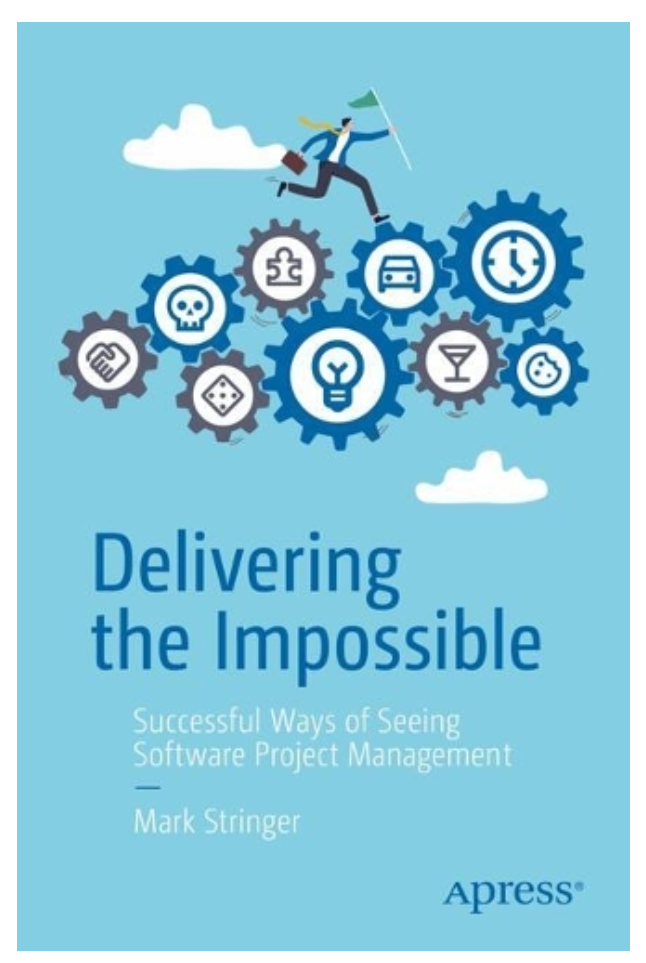
In my book - “Delivering the Impossible” - I warned about something called “Agreed Activity”.
Agreed activity is something that looks like work, but isn’t. It’s just going through the motions. The example that I give is from improvisation - because that is where I get the idea from.
Improvisers get scared. So they “agree” on something that looks like activity. But it’s actually just safety, it doesn’t actually move the story forward. Imagine the improvisors are pretending to be on the deck of a ship. Rather than dealing with the pirate ship that one improviser has suggested is on the horizon, they’ll “agree” to scrub the decks.
But in my meetings, when I’m managing a project. I don’t want lots and lots of drama.
I want gentle progress. I don’t want dramatics and heroics. There’s a certain tone of voice that I want in my meetings. Yes, people are talking through ideas, they’re thinking about things.
They’re smart people. There’ll be emotions. But we’re not looking for hyperactivity.
There’s actually a name in improvisation for the opposite of agreed activity - “trouble salad.” This when the opposite instinct of the improvisers kicks in, and the add too many elements to the story. It gets so interesting that it’s boring.
Yeah, sure, let’s be focussing on a big issue - the pirate ship. Maybe there’s a storm that makes it even more difficult. But what’s that? The crew have scurvy? And there’s a serious leak? Which means the ship could go down any minute. And some of the crew are actually time-travelling aliens. And it’s actually a dream?
I try and keep each of my meetings to one thing. Planning - what are we going to for the next two weeks? Retro - how did it go? Show and Tell - this is what we did. Standup - I know I said each meeting should be just one thing - but actually it’s a little bit of all of the three above.
“But we need to be speeding up. We need to be moving faster.”
Do we? Do we really?
Sunday 8th February 2026
Mad shit that happened on a recent project
Part 1: Saying what everyone is thinking
We were at big-room planning. People had actually travelled there in person. Everybody was there. Everybody apart from the two or three people who were actually going to write the code. They weren’t invited.
The thing that everyone was talking about—everybody that I was talking to anyway—was the interim solution. The interim solution used COTS software. There was this idea that a lot of the possible customers (the customers were businesses) wouldn’t initially be able to use the bespoke online solution. They wanted the reassurance that they could use something that they already had on their desktop.
But what I was hearing was that user research had run into a problem with the interim solution. Maybe the sole traders wanted this solution. But our user research showed that the SMEs weren’t going to use it. They had security policies. It wouldn’t get past their email filters. They didn’t want it running on their machines.
This is what I’d been hearing all day.
I should have known.
When it came to the wrap-up and the product owner asked me if I wanted to do the summary…
I should have known.
“Well, the main thing that’s come out of today is that the interim solution is dead.”
I probably shouldn’t have said “dead.”
But it was dead.
Everybody in the room, to a man and woman, including the ones who all day had been telling me that the interim solution was dead, acted as if, rather than mentioning the elephant in the room, I had just unveiled an actual live elephant!!! And not like a well-trained elephant balancing on a beach ball. No, a wild bull elephant with massive tusks that was screeching and ready to charge.
“What? The interim solution is dead?”
“How can you know it’s dead?”
Maybe that screeching sound wasn’t from the bull elephant; it was the sound of the people who’d been telling me all day that the interim solution was dead slamming their opinions into reverse.
“Nobody said it was dead!”
“What are you talking about?”
“We can’t say that just yet!”
“We need more data.”
I felt ever so slightly exposed.
Only one user researcher came to my aid. She stood next to me and said, “I think what Mark means is that our research indicates that the interim solution won’t work for a substantial proportion of our users.”
But the damage was done. Management was furious. They had told a lot of people that the interim solution would work. They didn’t want to hear that it wouldn’t. They wanted “more data” to show that it wouldn’t.
Collect all the data you want. It’s still dead.
Wednesday 4th February 2026
What’s the simplest way of explaning my book?
There’s a temptation to think that project management is simple.
Despite all the evidence.
What evidence?
Projects run “late”.
Projects end up being “over budget”.
Sometimes projects aren’t delivered at all.
Why does this keep happening again and again?
Because projects are far more complex than we imagine.
Because projects are far more uncertain than we imagine.
Because we instinctively see projects in ways that are unhelpful.
My book tries to help us see projects in more helpful ways.
Projects aren’t just, or even mostly about delivering on initial promises.
Projects aren’t really about delivering “exactly what it says on the tin.”
Projects are about discovering value.
Projects are about putting users in touch with that value.
If we think about projects in this way, we can deliver something useful and valuable.
Even in situations where delivering what was initially promised would be impossible.
Tuesday 3rd February 2026
Joke writing exercises from yesterday.
Word definitions
Define the following words:
Pentastich
Brucine
Panocha
Chiasma
Macrura
Fitché
Heythrop
Labanotation
Explain to a Martian
-
Write down three people you really don’t like.
-
Explain to a martian why you love them.
Sayings
Rewrite these well-known sayings:
Devil take the hindmost
Old soldiers never die, they just fade away
Manners maketh man
All’s well that ends well
Never put off until tomorrow what you can do today
You can’t teach an old dog new tricks
The more the merrier
You can’t take it with you
Sunday January 25th 2026
I sat in an art gallery cafe this morning and wrote and wrote longhand. This is what Natalie Golberg recommends in “Writing down the bones”.
My experience is that it needs coupling with some good strategies for editing. Anyway long story short, I fleshed out the plot of an opera about project management.